Wasp, Hornet & Bee Removal in NEPA
Safe removal of wasp, hornet, and yellow jacket nests — including nests inside walls, attics, and underground.
Active season
Nests peak August–October
Category
Flying / stinging insect
First sign to watch for
A steady stream of insects entering one hole in siding, soffits, or the ground
Free inspection
Firm written quote before any work begins
Signs of Wasps & Hornets in Your Home
Spotting the problem early makes treatment faster and cheaper. Call us if you notice any of these:
- A steady stream of insects entering one hole in siding, soffits, or the ground
- A visible paper nest under eaves, decks, play equipment, or in shrubs
- Yellow jackets hovering low over lawns — a sign of an underground nest
- Buzzing or faint scratching inside a wall or ceiling
- Staining on drywall where a hidden nest has grown large
Our Wasp & Bee Treatment Process
- Step 1
Identification
We identify the species and nest location. Honey bee colonies are referred for live relocation; wasps, hornets, and yellow jackets are treated directly.
- Step 2
Removal
Protective equipment and professional products let us neutralize the nest safely — including void nests that store sprays only anger.
- Step 3
Prevention
We remove accessible nests, treat the entry area, and advise on sealing soffit gaps so a new queen does not reuse the site next spring.
What does wasps and hornets treatment cost?
Every job starts with a free inspection and a firm written quote — no surprises, no pressure. For typical price ranges in Pennsylvania, see our cost guide.
Wasp & Bee Control in Your City
Our technicians treat wasps and hornets problems across Northeastern PA — same-day service in the metro areas.
How to Identify Wasps & Hornets — and Why DIY Falls Short
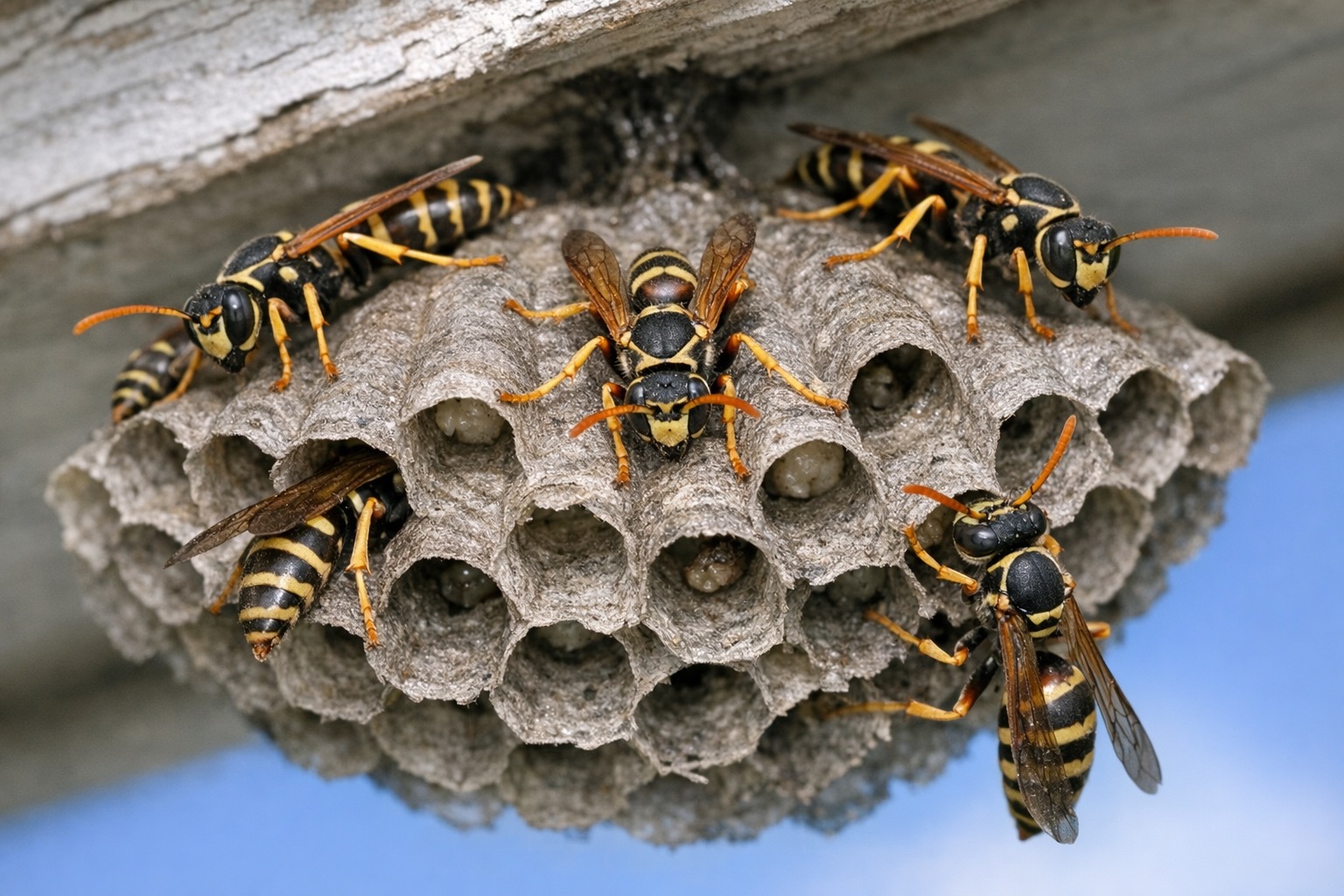
Knowing which stinging insect you have determines the response. Paper wasps build open umbrella combs under eaves and are relatively calm. Bald-faced hornets — actually large yellow jackets — build enclosed gray paper nests in trees and on structures and defend them hard. Eastern yellow jackets nest underground and in wall voids and cause most serious stings. Honey bees are fuzzy and golden-brown; we refer those colonies to local beekeepers for live relocation.
Late summer is stinging-insect season in Northeastern Pennsylvania. Paper wasps build open comb nests under eaves, bald-faced hornets hang football-sized nests in trees, and eastern yellow jackets — the most aggressive of the group — nest in wall voids and underground, defending them with mass stings when disturbed. By August and September a single colony can hold thousands of workers, which is why most sting emergencies happen at the end of summer.
The risk is not theoretical for the roughly one in thirteen Americans with sting allergies. Yellow jacket nests in lawns are routinely hit by mowers, and nests hidden in siding go unnoticed until someone leans against the wall. DIY sprays have their place for a small, visible starter nest in spring, but attacking a mature nest at arm's length — or sealing a void nest's entrance — can drive hundreds of angry wasps into the living space.
Our technicians carry the protective gear and extension equipment to treat nests at height, underground, and inside structural voids, usually in a single visit. We treat in the evening when the colony is home, remove accessible nests once activity stops, and seal entry points to prevent reuse. True honey bees are beneficial pollinators: when we find a honey bee colony, we refer it to local beekeepers for live removal instead of extermination.
Wasp & Bee Control — FAQ
Should I seal the hole wasps are using?
Not while the nest is active. Sealing a void nest traps the colony inside your walls, and wasps will chew into living spaces looking for an exit. Treat first, seal after.
Do you remove honey bees?
We do not exterminate honey bees — they are valuable pollinators and often protected. We refer established colonies to local beekeepers who relocate them alive.
When is the best time to remove a wasp nest?
Small spring nests are easy DIY targets; anything larger than a golf ball, or any nest after mid-summer, is safer left to a professional with protective equipment.
Wasp & Bee Problem? Get a Free Quote
Call now or send a request — a licensed NEPA technician will inspect, identify, and give you a firm written quote for wasps and hornets treatment. Same-day service available across Scranton, Wilkes-Barre, and the surrounding counties.
Mon–Sat 7:00 AM – 7:00 PM · 2-year bed bug warranty