Wildlife Removal & Exclusion in NEPA
Humane removal and exclusion for squirrels, raccoons, bats, skunks, and other nuisance wildlife.
Active season
Peak intrusions October–March
Category
Nuisance wildlife
First sign to watch for
Heavy thumping or rolling sounds in the attic, especially at dawn and dusk
Free inspection
Firm written quote before any work begins
Signs of Wildlife Activity in Your Home
Spotting the problem early makes treatment faster and cheaper. Call us if you notice any of these:
- Heavy thumping or rolling sounds in the attic, especially at dawn and dusk
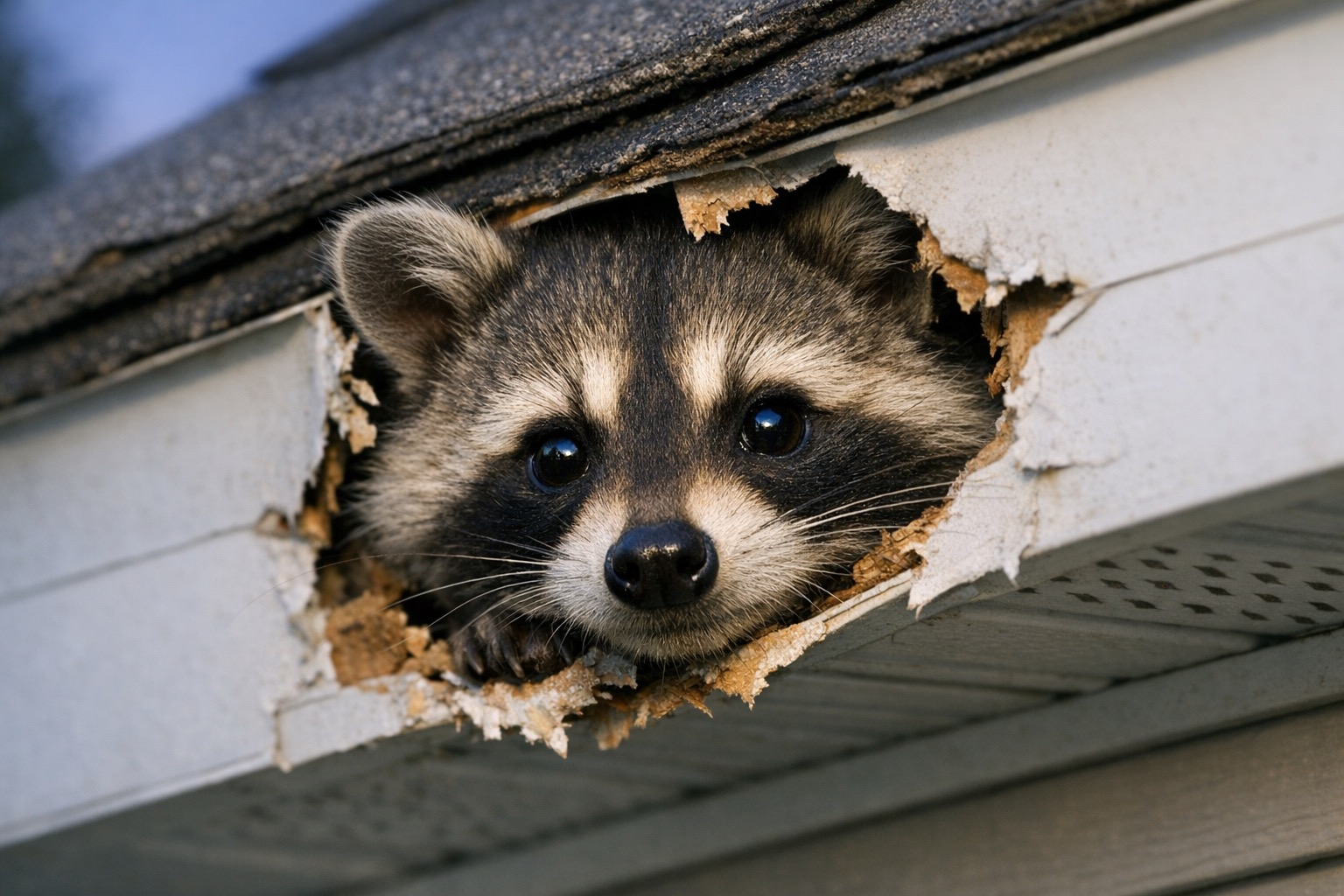
- Torn soffits, chewed fascia, or damaged roof vents
- Droppings or urine staining in the attic or crawl space
- Chirping or scratching inside chimneys and walls
- A strong musky odor near entry points or under decks
Our Wildlife Treatment Process
- Step 1
Inspection
We identify the species, locate entry points from roofline to foundation, and check for young — timing matters with litters in spring.
- Step 2
Humane Removal
One-way doors and live trapping remove animals without harm. Bat work follows Pennsylvania seasonal rules that protect flightless pups.
- Step 3
Exclusion & Cleanup
We seal entries with animal-proof materials, sanitize contaminated areas, and can replace damaged insulation.
What does nuisance wildlife treatment cost?
Every job starts with a free inspection and a firm written quote — no surprises, no pressure. For typical price ranges in Pennsylvania, see our cost guide.
Wildlife Control in Your City
Our technicians treat nuisance wildlife problems across Northeastern PA — same-day service in the metro areas.
How to Identify Wildlife Activity — and Why DIY Falls Short
You can usually identify the animal before you ever see it. Gray squirrels make fast, scampering noise at dawn and dusk and leave two-inch chewed entry holes at the roofline. Raccoons are heavier — loud thumps at night, torn soffits, and large droppings in one latrine area. Bats announce themselves with squeaking at dusk, dark staining around gable vents, and rice-sized droppings that crumble to dust. Skunks and groundhogs give themselves away with burrows under decks and sheds.
Northeastern Pennsylvania's mix of city neighborhoods and wooded ridges means wildlife pressure is constant. Gray squirrels chew into attics through roof vents and fascia gaps, raccoons pry off soffit panels and den in chimneys, and bats roost in the gable vents of older Scranton and Wilkes-Barre homes. Skunks and groundhogs burrow under decks and sheds, and every fall the migration indoors begins in earnest as temperatures drop.
Wildlife in a structure is never a wait-and-see problem. Squirrels and raccoons gnaw wiring and destroy insulation, bat guano accumulates and can harbor histoplasmosis spores, and a skunk under the deck is one surprise away from a very bad evening. Pennsylvania law also shapes how removal must happen: bats are protected during the summer pup season, and relocation of certain species is regulated. Doing it wrong is both inhumane and, in some cases, illegal.
Our approach is removal plus exclusion — getting the animals out is only half the job. We install one-way devices so animals leave and cannot return, handle live trapping where needed, and then seal the structure with heavy-gauge materials that stand up to determined chewing. Contaminated insulation and droppings are cleaned and sanitized. For homes backing onto woods, the Green Ridge corridors, or the Pocono foothills, we offer seasonal inspections that catch new entry attempts before they become den sites.
Wildlife Control — FAQ
Can you remove bats from my attic?
Yes, with timing. Pennsylvania protects bat pups, so exclusion work is scheduled outside the summer maternity season or done with devices that let adults out once pups can fly. We will tell you exactly what is possible when.
Do you trap and relocate animals?
Where legal and humane, yes — but exclusion is usually the better answer, since relocating one animal just opens the territory to another. We explain the options for your situation.
How do animals get into attics?
Through gaps at roof intersections, uncapped chimneys, rotted soffits, gable vents, and utility penetrations. Squirrels need only a two-inch hole and will enlarge smaller ones by chewing.
Wildlife Problem? Get a Free Quote
Call now or send a request — a licensed NEPA technician will inspect, identify, and give you a firm written quote for nuisance wildlife treatment. Same-day service available across Scranton, Wilkes-Barre, and the surrounding counties.
Mon–Sat 7:00 AM – 7:00 PM · 2-year bed bug warranty