Carpenter Ant Control & Extermination in NEPA
Colony-level treatments that find and eliminate the parent nest, not just the ants you see.
Active season
Swarm in spring; forage May–September
Category
Crawling insect
First sign to watch for
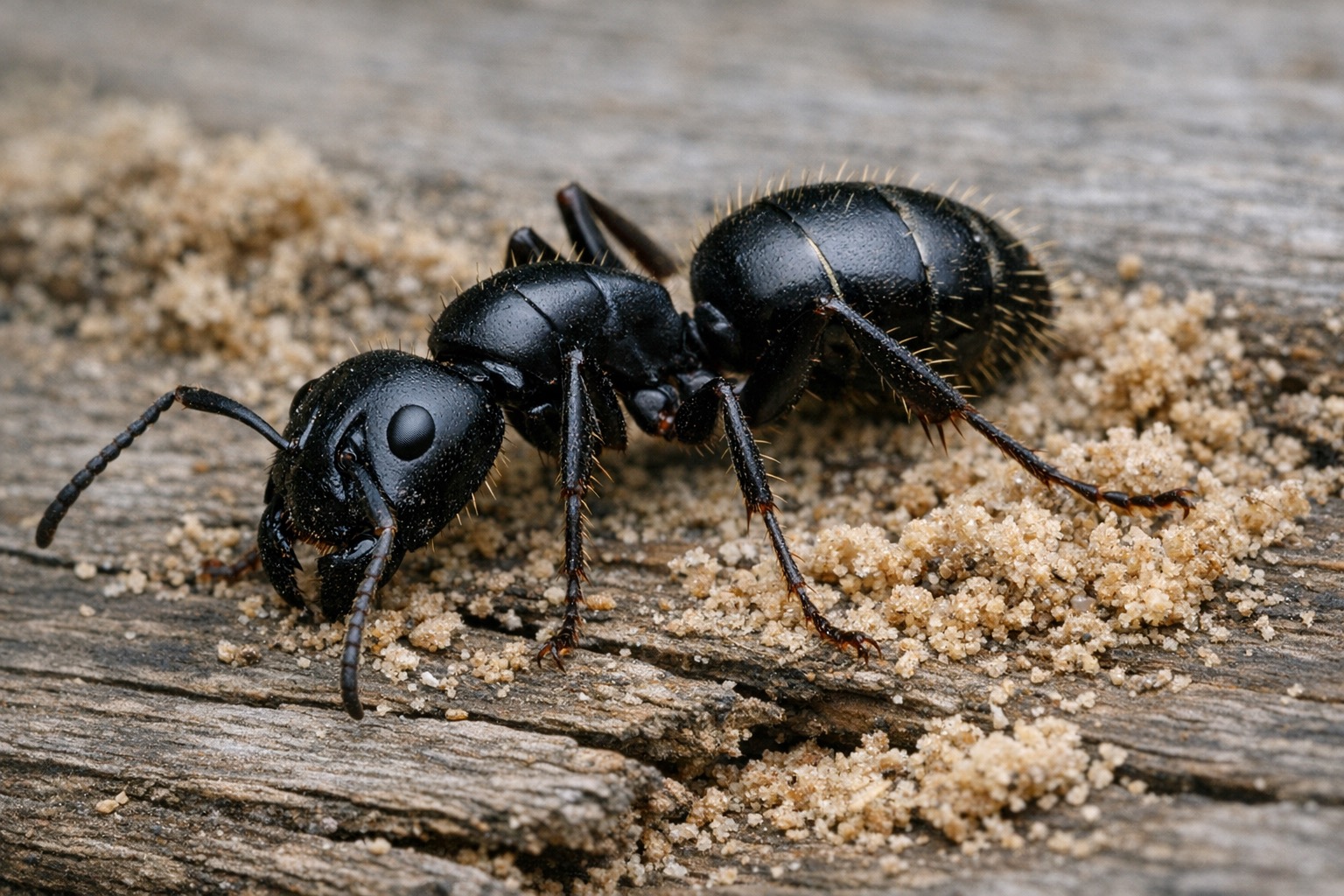
Large black ants, up to half an inch, foraging in kitchens or along foundations
Free inspection
Firm written quote before any work begins
Signs of Carpenter Ants in Your Home
Spotting the problem early makes treatment faster and cheaper. Call us if you notice any of these:
- Large black ants, up to half an inch, foraging in kitchens or along foundations
- Small piles of coarse sawdust-like frass below baseboards or window frames
- Faint rustling sounds inside walls, often at night
- Winged swarmers emerging indoors in spring
- Trails of ants on trees, fences, or utility lines leading toward the house
Our Carpenter Ant Treatment Process
- Step 1
Inspection
We follow foraging trails to locate satellite nests indoors and the parent colony — usually in a stump, woodpile, or landscape timber outside.
- Step 2
Treatment
Non-repellent treatments and baits are carried back through the colony, eliminating the queen and the nest network rather than the visible foragers.
- Step 3
Correction
We point out the moisture damage and wood-to-soil contact that attracted the colony, so repairs remove the reason the ants moved in.
What does carpenter ants treatment cost?
Every job starts with a free inspection and a firm written quote — no surprises, no pressure. For typical price ranges in Pennsylvania, see our cost guide.
Carpenter Ant Control in Your City
Our technicians treat carpenter ants problems across Northeastern PA — same-day service in the metro areas.
How to Identify Carpenter Ants — and Why DIY Falls Short
Carpenter ants are easy to recognize once you know the markers: large workers from a quarter to half an inch, usually black or black-and-red, with a smoothly rounded thorax and a single node between thorax and abdomen. The sawdust-like frass they eject contains insect parts — unlike termite damage, which leaves mud and wood hollowed with soil inside. Winged swarmers indoors in spring mean a nest is already established in the structure, not just visiting.
Carpenter ants are Pennsylvania's most common wood-destroying insect after termites, and Penn State Extension field guides list them among the top structural pests in the state. They do not eat wood — they excavate smooth galleries in damp or decaying wood to raise their young. That makes them a double warning: the ants themselves weaken decks, porches, and framing, and their presence almost always signals a moisture problem that needs attention anyway.
A mature colony in a stump or tree outside sends satellite nests into structures, and homeowners typically see only the foragers — big black ants trailing across the kitchen counter at dusk. Spraying the visible ants kills a few percent of the colony and causes the rest to bud into new nests. Piles of frass (insect parts mixed with sawdust) kicked out of galleries are the classic diagnostic sign, often found on basement sills and below window frames.
Lasting control means finding the parent colony. Our technicians trace trails, treat voids with non-repellent products that spread through the colony by contact, and apply baits workers carry home to the queen. We then map the moisture conditions — leaking sills, clogged gutters, wood-to-soil contact — so you can fix what attracted them. Spring is the time to act: swarms indoors mean a nest is already established inside the structure.
Carpenter Ant Control — FAQ
Are carpenter ants as destructive as termites?
They work more slowly than termites, but an established colony can seriously damage porches, window framing, and rim joists over a few seasons. They also signal hidden moisture damage, which is often the bigger issue.
Why do I see big ants mostly at night?
Carpenter ants forage primarily after dusk. Nighttime trails in the kitchen or along the foundation are a reliable sign of a nest in or near the structure.
Can I just spray the ants I see?
Contact sprays kill only the foragers — a small fraction of the colony — and can cause the nest to split into multiple satellite nests. Colony-level baits and non-repellents are the effective approach.
Carpenter Ant Problem? Get a Free Quote
Call now or send a request — a licensed NEPA technician will inspect, identify, and give you a firm written quote for carpenter ants treatment. Same-day service available across Scranton, Wilkes-Barre, and the surrounding counties.
Mon–Sat 7:00 AM – 7:00 PM · 2-year bed bug warranty