Termite Control & Extermination in NEPA
Thorough inspections and proven soil treatments and baiting systems that protect the structure of your home.
Active season
Swarms in spring; active year-round underground
Category
Crawling insect
First sign to watch for
Mud tubes on foundation walls, piers, or in crawl spaces
Free inspection
Firm written quote before any work begins
Signs of Termites in Your Home
Spotting the problem early makes treatment faster and cheaper. Call us if you notice any of these:
- Mud tubes on foundation walls, piers, or in crawl spaces
- Discarded wings near windowsills after a spring swarm
- Hollow-sounding or blistered wood, or tight-fitting doors and windows
- Fine, pellet-like frass near wood (more typical of drywood species)
- Sagging floors or bubbling paint over damaged framing
Our Termite Treatment Process
- Step 1
Inspection
A licensed inspector examines the foundation, crawl space, sill plates, and moisture-prone areas, and documents any activity or conducive conditions.
- Step 2
Treatment
Depending on construction, we install a liquid soil barrier and/or an in-ground baiting system that eliminates the colony at its source.
- Step 3
Protection
Annual monitoring visits keep the protection intact and catch any new activity early, before it becomes structural damage.
What does termites treatment cost?
Every job starts with a free inspection and a firm written quote — no surprises, no pressure. For typical price ranges in Pennsylvania, see our cost guide.
Termite Control in Your City
Our technicians treat termites problems across Northeastern PA — same-day service in the metro areas.
How to Identify Termites — and Why DIY Falls Short
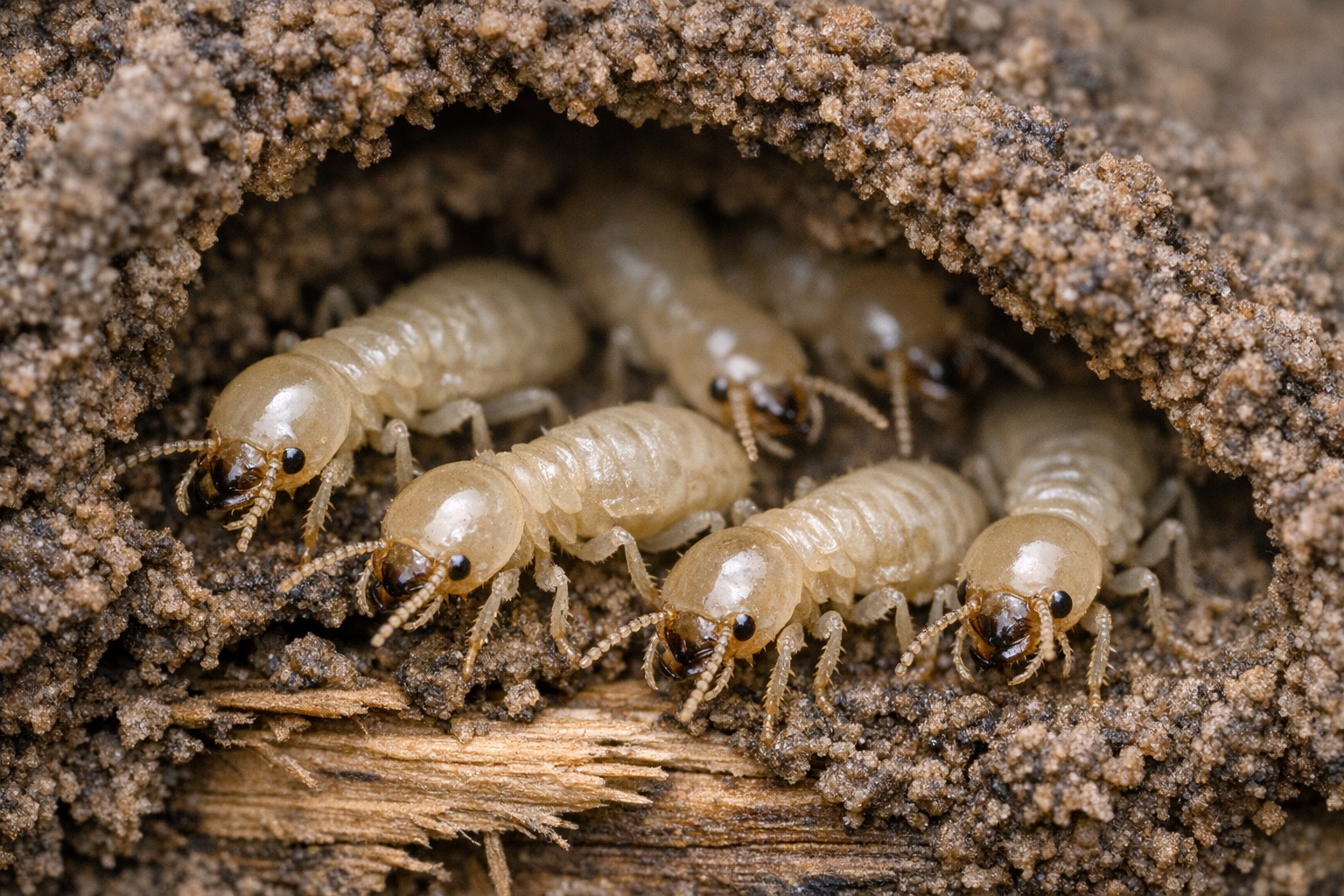
The termites we deal with in NEPA are eastern subterranean termites: creamy-white workers that stay hidden, and dark-bodied swarmers that appear on warm spring days after rain. Mud tubes — pencil-width tunnels of soil on foundation walls — are the definitive sign, because they connect the colony in the ground to the wood above. Winged termites are routinely confused with flying ants; straight antennae, a thick waist, and equal-length wings separate them.
Eastern subterranean termites are the one pest in Northeastern Pennsylvania that can quietly compromise the structure of your home. Colonies live in the soil and forage into framing through mud tubes, feeding on cellulose around the clock. Because they eat wood from the inside out, damage is frequently discovered only during a renovation or a real-estate inspection — years after it began. NEPA's older housing stock, stone foundations, and damp basements create ideal conditions.
Spring is swarm season: on warm days after rain, reproductive termites emerge in clouds that homeowners often mistake for flying ants. A swarm inside the home is a reliable sign of an established colony in or under the structure. The differences matter — ant swarmers have elbowed antennae and a pinched waist, while termite swarmers have straight antennae and equal-length wings — and our inspectors confirm identification on site.
Modern termite control offers two proven strategies: liquid soil treatments that create a continuous treated zone around the foundation, and baiting systems that foraging workers carry back to eliminate the colony itself. We recommend the right approach for your construction type and lot conditions, and every treatment includes a written proposal and a renewable protection plan. Annual inspections are the cheapest insurance a homeowner can buy against the most expensive pest in Pennsylvania.
Termite Control — FAQ
How do I know if I have termites or flying ants?
Termites have straight antennae, a thick waist, and four equal-length wings; ants have elbowed antennae, a pinched waist, and uneven wings. If you are unsure, save a sample or a photo and we will confirm during a free inspection.
Does homeowners insurance cover termite damage?
Almost never — policies treat termite damage as preventable maintenance. That is why inspections and a protection plan matter: prevention costs a fraction of structural repair.
How long does a termite treatment last?
Modern liquid treatments protect for five years or more when applied correctly, and baiting systems provide continuous protection as long as they are monitored. Our annual plan keeps either system current.
Termite Problem? Get a Free Quote
Call now or send a request — a licensed NEPA technician will inspect, identify, and give you a firm written quote for termites treatment. Same-day service available across Scranton, Wilkes-Barre, and the surrounding counties.
Mon–Sat 7:00 AM – 7:00 PM · 2-year bed bug warranty