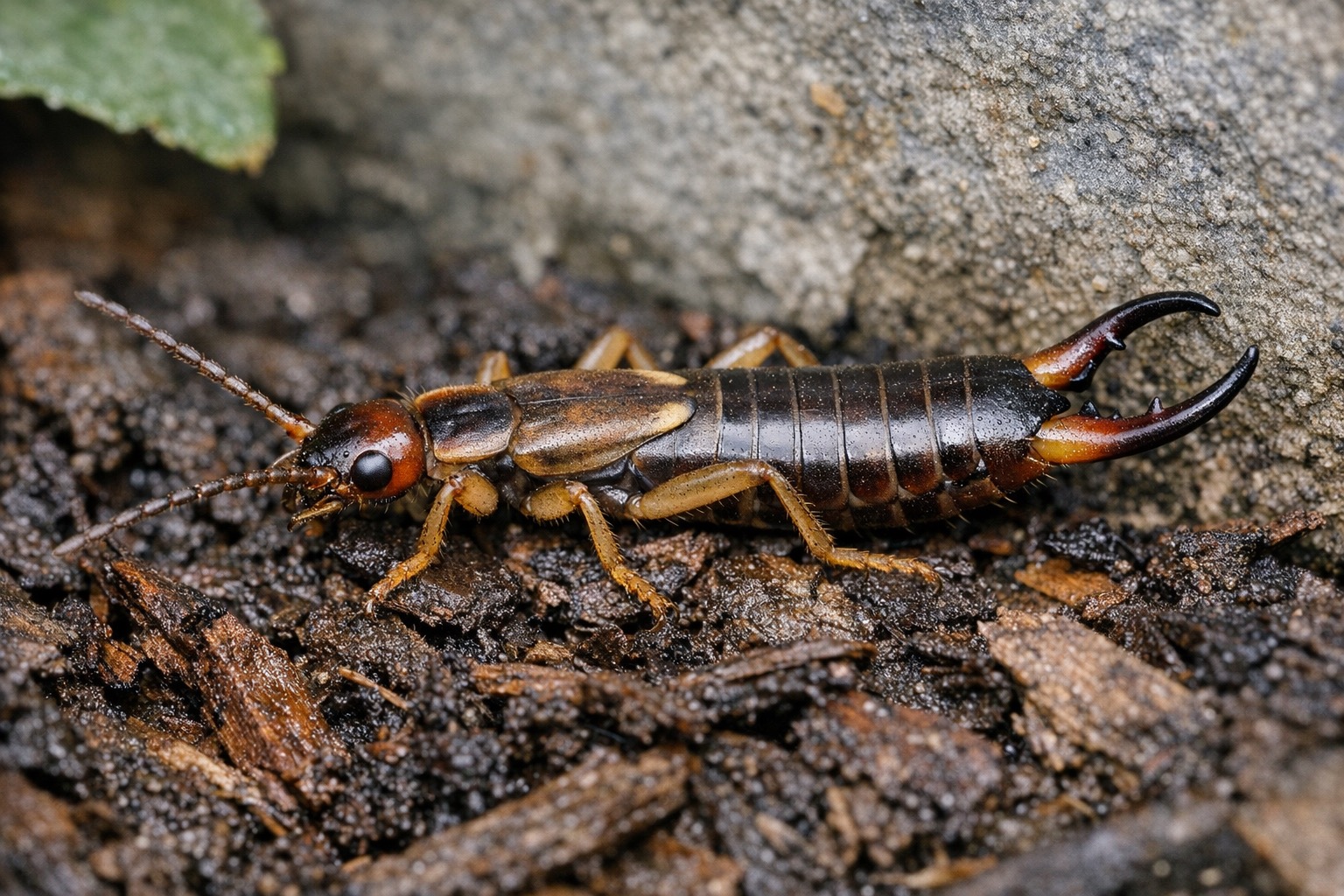
Earwig Control & Extermination in NEPA
Perimeter and moisture-zone treatments that keep earwigs outside where they belong.
Active season
June–September, after wet spells
Category
Crawling insect
First sign to watch for
Brown, pincher-tailed insects in basements, laundry rooms, and bathrooms
Free inspection
Firm written quote before any work begins
Signs of Earwigs in Your Home
Spotting the problem early makes treatment faster and cheaper. Call us if you notice any of these:
- Brown, pincher-tailed insects in basements, laundry rooms, and bathrooms
- Earwigs hiding under doormats, pots, mulch, and damp leaf litter
- Ragged holes in garden flowers and vegetable seedlings
- Activity spikes after heavy rain or in newly mulched beds
- Earwigs in stored items kept in damp garages and sheds
Our Earwig Treatment Process
- Step 1
Habitat Check
Earwigs need moisture. We locate the damp mulch, leaf litter, and drainage problems sustaining the population around your foundation.
- Step 2
Perimeter Treatment
Granular and liquid treatments around the foundation, entries, and harborage areas intercept earwigs before they migrate indoors.
- Step 3
Habitat Correction
Pulling mulch back from the foundation, fixing downspouts, and reducing ground moisture removes the conditions earwigs need.
What does earwigs treatment cost?
Every job starts with a free inspection and a firm written quote — no surprises, no pressure. For typical price ranges in Pennsylvania, see our cost guide.
Earwig Control in Your City
Our technicians treat earwigs problems across Northeastern PA — same-day service in the metro areas.
How to Identify Earwigs — and Why DIY Falls Short
Earwigs are unmistakable: reddish-brown, about three-quarters of an inch, with a pair of forceps-like pincers at the tail — curved on males, straighter on females. They are nocturnal, so daytime sightings usually mean they were hiding under something damp: doormats, mulch, flowerpots, or folded hoses. The few lookalikes, like rove beetles, lack the prominent pincers. Finding them indoors almost always points to a moisture source near the entry point.
Earwigs inspire outsized fear for an insect that is essentially harmless — the old myth about crawling into ears has no basis, and their rear pincers can deliver at most a light pinch. But what they lack in danger they make up in persistence. These moisture-loving insects thrive in the damp conditions around NEPA foundations, and wet summers send them migrating indoors in numbers that startle even tolerant homeowners.
Outdoors, earwigs are actually modestly beneficial, preying on aphids and breaking down organic matter. The problem starts when populations build in thick mulch, landscape timbers, and leaf litter pressed against the foundation, and then weather drives them inside — heavy rain floods their harborage, while drought sends them seeking moisture in basements and bathrooms. Ground-level entries, basement window wells, and garage doors are the usual routes.
Control is mostly about the perimeter. Our treatments create a treated band around the foundation and target the harborage zones where earwigs congregate, while we advise on the habitat corrections that make the biggest long-term difference: keeping mulch a foot back from the wall, extending downspouts, and clearing damp debris. Combined, these steps turn a summer-long trickle of earwigs into an occasional visitor.
Earwig Control — FAQ
Do earwigs really crawl into ears?
No — that is an old myth with no documented basis. Earwigs are harmless to people; the pincers are for defense and mating, and can give only a mild pinch.
Why are earwigs in my basement?
Basements offer the cool, damp conditions earwigs need. They enter through ground-level gaps, window wells, and floor drains, especially after heavy rain floods their outdoor harborage.
Will they damage my garden?
Large populations chew ragged holes in soft flowers and seedlings like dahlias, zinnias, and lettuce. Perimeter treatment plus reducing mulch depth against beds usually resolves the damage.
Earwig Problem? Get a Free Quote
Call now or send a request — a licensed NEPA technician will inspect, identify, and give you a firm written quote for earwigs treatment. Same-day service available across Scranton, Wilkes-Barre, and the surrounding counties.
Mon–Sat 7:00 AM – 7:00 PM · 2-year bed bug warranty