TL;DR — the short answer
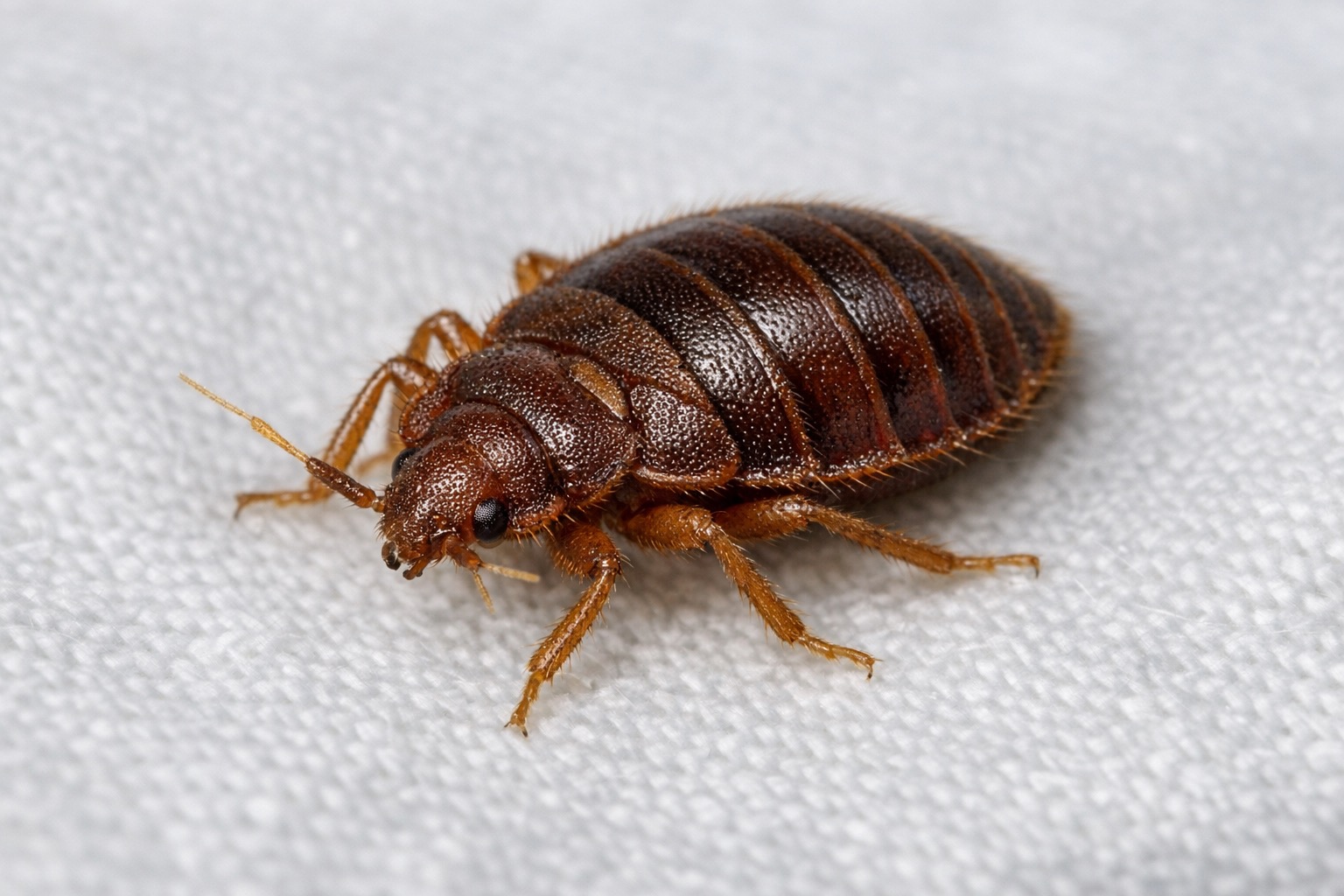
Adult bed bugs are flat, oval, reddish-brown, and roughly apple-seed sized (about ¼ inch); after feeding they swell and turn darker. Nymphs are smaller and translucent yellow-white, darkening as they mature, and eggs are pearly white and pinhead-sized. The most common lookalikes are carpet beetle larvae, booklice, and young cockroach nymphs.
Updated October 25, 2026 · Written for Northeastern PA homeowners
Bed Bugs at Every Life Stage
Adults: flat, oval, wingless, reddish-brown, apple-seed sized. Just-fed adults: swollen, elongated, dark red. Nymphs: pinhead to sesame-seed sized, nearly translucent until their first blood meal, then bright red briefly. Eggs: 1 mm, pearly white, glued in clusters deep in fabric seams and cracks.
Bed bugs don't fly or jump — they crawl, and they're visible to the naked eye at every stage past the egg. The flat, unfed profile is what lets adults slide into mattress piping, headboard joints, and the thickness of a credit card gap. After feeding, the body swells like a tiny balloon and darkens to mahogany; people often think the fed and unfed bug are two different insects.
Nymphs cause the most confusion because the smallest stages are nearly transparent — look for the dark spot of digested blood inside the abdomen against a light surface. Shed skins accumulate at each of the five molts, so a cluster of translucent husks in one seam is effectively a growth chart of the infestation.
Bugs Commonly Mistaken for Bed Bugs
The four usual lookalikes in PA homes: carpet beetle larvae (small, hairy, striped — don't bite), booklice (tiny, pale, found in damp areas), cockroach nymphs (longer-bodied, fast-moving, with visible antennae), and bat bugs (nearly identical to bed bugs but tied to bats in the attic). Misidentification wastes weeks on the wrong treatment.
The bat bug case matters in NEPA specifically: older Scranton and Wilkes-Barre homes with bat activity in gable vents and attics occasionally host bat bugs that wander into bedrooms when the bats leave. Treating for bed bugs without addressing the bat roost solves nothing — another reason identification comes first. The Penn State Extension bed bug page has identification photos worth comparing against your sample.
| Lookalike | How it differs | Where you find it |
|---|---|---|
| Carpet beetle larvae | Hairy, segmented, carrot-shaped; don't bite | Carpets, closets, wool and stored fabrics |
| Booklice | Smaller, softer, pale; long antennae | Damp areas, moldy paper, windowsills |
| Cockroach nymphs | Cylindrical body, very fast, long antennae | Kitchens, bathrooms — not clustered on beds |
| Bat bugs | Nearly identical; longer fringe hairs (needs magnification) | Near bat roosts — attics, chimneys, wall voids |
| Spider beetles | Round, shiny, spider-like shape | Pantries, stored food areas |
Where to Look for Physical Evidence
Work outward from where people sleep: mattress seams and tags, box spring underside and staples, headboard back and brackets, bed frame joints, then nightstands, drawer joints, picture frames, and outlet covers on shared walls. A flashlight plus a credit card dragged along seams flushes bugs and debris into view.
You're looking for the bugs plus their evidence trail: dark fecal dots that bleed like marker ink, translucent shed skins, and pinhead eggs glued into fabric. The EPA's bed bug portal includes detailed guidance on inspection and what the evidence looks like at each stage.
In multi-unit buildings, check the shared-wall side of the room first — bugs travel along wall voids and utility runs, and infestations often enter from an adjacent unit rather than from luggage.
Found Something? Your Next Steps
Capture a sample on clear tape or in a sealed bag, photograph it next to a coin for scale, and get it professionally identified — misidentification is the most expensive mistake in bed bug control. Meanwhile keep belongings in the affected room, high-heat-dry bedding, and don't fog or spray.
A confirmed bed bug — or evidence that matches — means acting on the infestation, not just the specimen. Our companion guide on the seven signs of bed bugs walks through what to do in the first 48 hours, including the DIY mistakes that scatter bugs deeper into the structure.
If the sample turns out to be a carpet beetle or booklouse, you've saved yourself an expensive treatment and gained a much smaller problem. Either way, the identification step is the fork in the road — and it costs nothing.
When to Call a Pro
The moment identification is confirmed — bed bugs are the pest where waiting and DIY both measurably increase the final bill. A professional inspection maps how far the infestation has spread beyond the bed, and heat-based treatment eliminates eggs, nymphs, and adults in one visit. Every treatment we perform carries a 2-year bed bug warranty.
Free inspection, firm written quote, no pressure. Same-day service available across Scranton, Wilkes-Barre, and the surrounding counties.
Get a Free Quote