TL;DR — the short answer
To get rid of cockroaches: identify the species, remove their food and water through aggressive sanitation, then apply gel baits and insect growth regulators at harborage points — never foggers or repellent sprays, which scatter roaches deeper into walls. German roaches need two to three rounds because egg cases hatch weeks after treatment. Seeing roaches in daylight means a heavy infestation.
Updated October 25, 2026 · Written for Northeastern PA homeowners
Step 1: Identify the Species
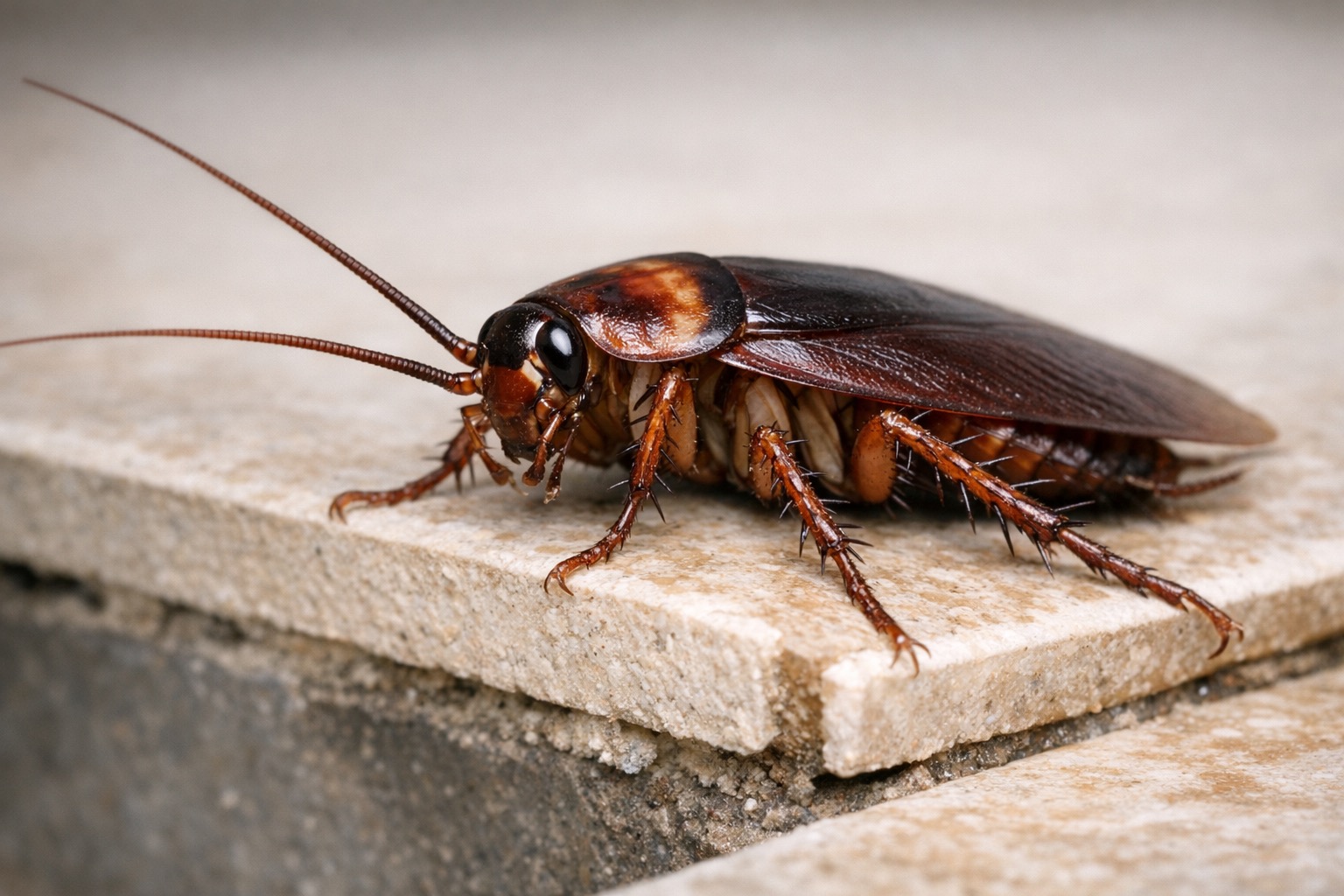
Small tan roaches with two dark stripes behind the head are German cockroaches — the most common indoor species in NEPA kitchens and the hardest to eliminate. Large reddish-brown roaches in basements and drains are American cockroaches. The species decides the strategy, because German roaches need bait programs while American roaches often respond to perimeter treatment.
The German cockroach lives almost exclusively indoors, clustering in warm, humid voids within a few feet of food and water — behind refrigerators, under sinks, inside cabinet hinges. It reproduces fast enough that a few survivors rebuild the population in weeks. American cockroaches, by contrast, favor basements, boiler rooms, and floor drains and often wander up from sewer connections — common in older Scranton and Wilkes-Barre basements.
Confirm with sticky traps placed along walls behind appliances overnight. What you catch, and how many, tells you both the species and the severity — roaches caught in daylight hours or in every trap mean the harborage is overcrowded and the infestation is advanced.
Step 2: Remove Food, Water, and Grease
Roaches need three things: food, water, and harborage. Degrease the stove and range hood, seal pantry food in hard containers, fix dripping faucets and trap leaks, empty trash nightly, and pull appliances out to clean behind them. Sanitation doesn't kill the existing population, but it makes baiting dramatically more effective.
Grease is the most overlooked food source — the film behind and under the stove feeds a roach population for weeks. Clean it, and the gel baits you place next become the most attractive food in the room, which is exactly what you want.
Water matters as much as food. German roaches cluster near moisture, so repair the dripping P-trap, stop leaving wet sponges in the sink, and run the bathroom fan. In NEPA's older housing, damp basements and cellar drains sustain American roach pressure from below — a dehumidifier and drain maintenance cut it meaningfully.
Step 3: Bait and Growth Regulators — What Works
Professional roach control leads with gel baits and insect growth regulators, not sprays. Workers eat the bait, return to the harborage, and share it through the population; growth regulators sterilize survivors and prevent nymphs from maturing. Place pea-sized dots in cracks near activity — hinges, drawer corners, appliance motors — and refresh them weekly.
Consumer gel baits sold in syringes use the same strategy as professional products, at lower concentrations. Place many small dots rather than a few big ones, inside cabinet corners, along plumbing penetrations, behind the fridge and stove, and near every spot your sticky traps caught roaches. Don't spray anything near bait placements — contaminated bait gets ignored.
Rotate products if activity persists past two weeks; German roaches have documented bait aversion and resistance, which is one reason professional programs rotate active ingredients across visits. Add sticky traps as monitors — declining catches are your proof the program is working.
Step 4: What NOT to Do
Skip foggers and total-release bombs entirely: they don't penetrate the cracks roaches hide in, leave egg cases untouched, and drive the population deeper into wall voids and adjacent rooms. Repellent sprays have the same scattering effect. Both typically turn a kitchen infestation into a whole-home one.
The EPA's safe pest control guidance consistently favors targeted, least-toxic methods — baits, traps, and exclusion — over broadcast spraying indoors. Boric acid dust applied lightly into dry wall voids and under appliances is the one DIY dust with real value, but it must be a barely-visible film; roaches avoid piles, and heavy application is a hazard around kids and pets.
Also resist the urge to crush the egg cases you find without removing them — vacuum oothecae up and dispose of the bag outside. Each German roach egg case holds 30 to 40 nymphs.
Roaches in Apartments and Row Homes
In multi-unit buildings, roaches travel shared plumbing chases, electrical runs, and party walls — treating one unit while the neighbor's stays infested produces only temporary relief. Coordinate with your landlord and adjacent units, seal penetrations around pipes with escutcheons and sealant, and document activity in writing.
Much of Scranton and Wilkes-Barre's housing stock is attached or multi-unit, which makes roach control a building-level problem. If you're a renter, Pennsylvania landlords are generally responsible for keeping units habitable — report activity promptly and in writing, and ask for building-wide or at least adjacent-unit treatment.
Whether you rent or own, your personal perimeter matters: seal every pipe penetration under sinks with mesh and sealant, keep sticky traps running as early warning, and inspect grocery bags, delivery boxes, and used appliances before they come inside — cardboard from infested warehouses is a classic introduction route.
When to Call a Pro for Roaches
Call a professional when you're seeing roaches during the day, when two weeks of disciplined baiting hasn't reduced trap catches, when the infestation involves German roaches in more than one room, or whenever the problem spans units in a multi-unit building. Professional programs rotate commercial baits and growth regulators across two to three visits — which is what egg cases hatching weeks later demand.
Free inspection, firm written quote, no pressure. Same-day service available across Scranton, Wilkes-Barre, and the surrounding counties.
Get a Free Quote