TL;DR — the short answer
Getting rid of mice and rats takes three moves in the right order: remove food and shelter, trap out the active population with snap traps along walls, then seal every exterior gap a quarter-inch or larger with rodent-proof materials. Skip indoor poison — rodents die in walls. In NEPA, finish exclusion before the October invasion; mice that winter inside breed until spring.
Updated October 25, 2026 · Written for Northeastern PA homeowners
First: Confirm Mice vs. Rats
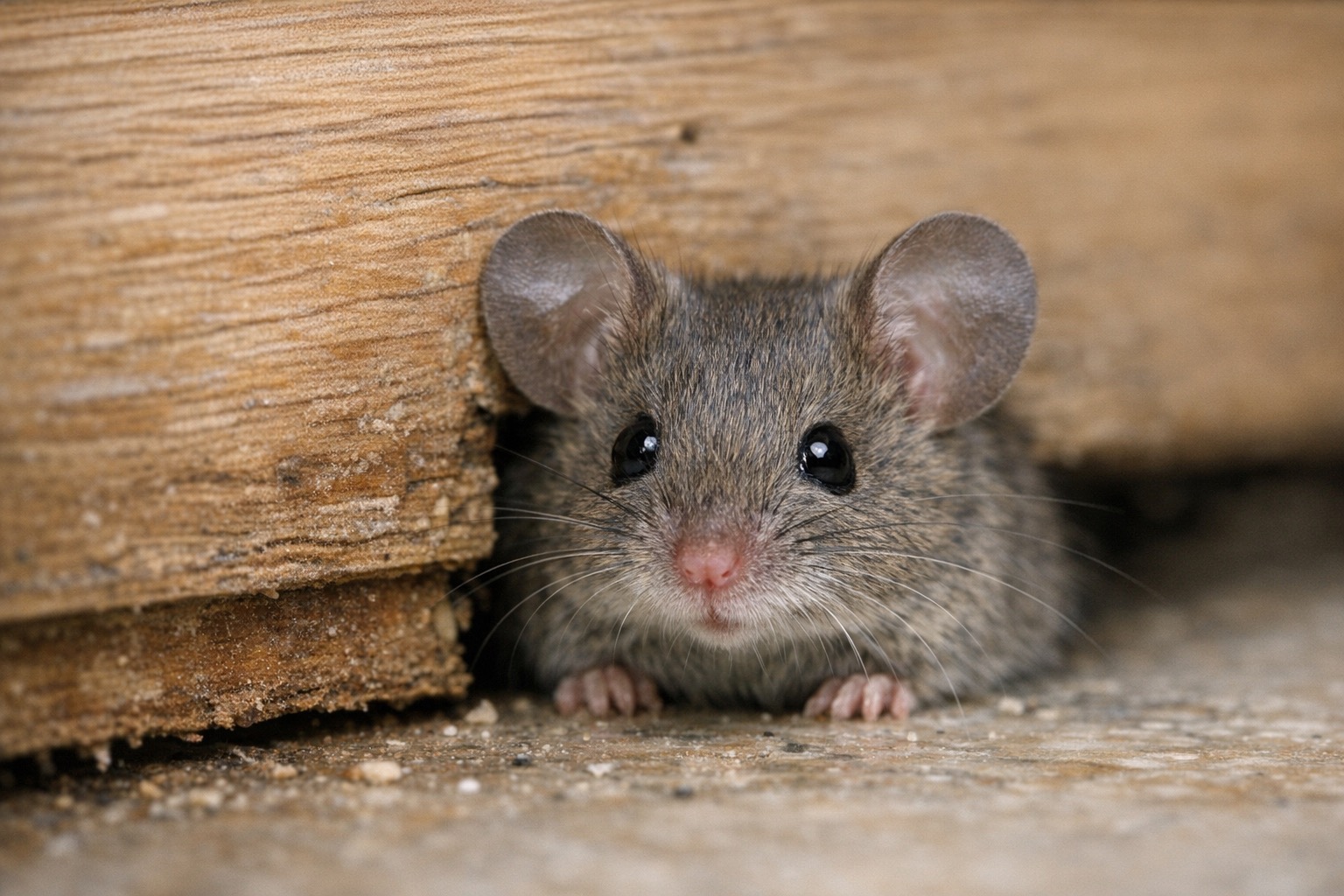
Mouse droppings are rice-sized and scattered along runways; rat droppings are capsule-shaped, up to three-quarters of an inch, and grouped. Mice squeeze through dime-sized gaps, while rats need a quarter-sized opening. Nighttime scratching in walls, gnaw marks, and greasy rub marks along baseboards confirm rodents rather than squirrels or insects.
The fix depends on the animal. House mice are curious nibblers that sample many food sources nightly; Norway rats are cautious and avoid new objects for days. Misidentifying them wastes weeks — mouse traps are too small for rats, and rat behavior defeats poorly planned trap lines.
| Sign | House mouse | Norway rat |
|---|---|---|
| Droppings | Rice-sized (¼"), pointed ends, scattered | Capsule-shaped (¾"), grouped in clusters |
| Entry gap needed | Dime-sized (¼") | Quarter-sized (1") |
| Sounds | Light scratching, scurrying at night | Heavier thumping, gnawing, wall movement |
| Behavior | Curious — investigates new traps quickly | Neophobic — avoids new objects for days |
| Typical nesting | Walls, cabinets, appliance voids | Basements, crawl spaces, burrows outside |
Step 1: Cut Off Food, Water, and Shelter
Rodents stay where food is easy. Store pantry goods and pet food in hard sealed containers, never leave pet bowls out overnight, fix dripping pipes, and reduce clutter that provides nesting cover. Outside, move firewood away from the foundation and clean up spilled bird seed — both are classic NEPA mouse magnets.
Trapping without sanitation is bailing a boat with the plug out. Walk the kitchen, pantry, and basement with fresh eyes: cereal boxes and flour bags are mouse buffets, and a dripping trap under a sink is a water station. Hard plastic or glass containers with tight lids remove the reward; a tidy, decluttered basement removes the shelter.
Outside matters too: firewood stacked against the house and bird feeders spilling seed hold rodents at the perimeter until the first cold snap pushes them inside. And in Scranton and Wilkes-Barre row homes, shared walls mean your neighbor's sanitation is part of your problem — sealing your own entry points becomes even more important.
Step 2: Trap the Active Population
Snap traps are the most effective DIY tool: cheap, quick-kill, and reusable. Place them perpendicular to walls with the trigger against the baseboard, bait with a pea-sized smear of peanut butter, and set many at once — a dozen traps for mice is not overkill. Check daily and keep resetting until catches stop.
Placement beats bait. Rodents run along walls with their whiskers touching the surface, so traps belong flat against baseboards, behind appliances, and along the paths marked by droppings and rub marks — not in the middle of the floor. For mice, set traps every few feet along an active runway; for rats, pre-bait unset traps for two or three nights so they lose their suspicion, then set them all at once.
Skip glue boards, which are slow and inhumane, and think twice about indoor rodenticide — poisoned rodents often die inside wall voids, and bait around children and pets carries real risk. The EPA's rodenticide safety rules require tamper-resistant stations for consumer products for that reason, and Penn State Extension's IPM approach to mice recommends trapping indoors, reserving bait stations for exterior pressure.
Electronic traps are a legitimate upgrade for squeamish households — same physics, no visible catch. Whatever you choose, the program ends when a week passes with no catches, no new droppings, and no nighttime sounds.
Step 3: Seal Every Entry Point
Exclusion is the step that makes results permanent. A mouse needs a quarter-inch gap — walk your foundation and seal every opening with steel wool or copper mesh plus sealant, cover vents with hardware cloth, and add door sweeps and garage weatherstripping. Foam alone fails: mice chew straight through it.
Do the inspection in daylight, from the outside, moving slowly along the entire perimeter. The usual suspects in NEPA homes: gaps where gas, water, cable, and AC lines penetrate the wall; the joint where siding meets foundation; missing mortar in older block and fieldstone foundations; worn garage door seals; and unscreened attic and crawl space vents. Anything a pencil fits through admits a mouse.
Materials matter. Pack small gaps with steel wool or copper mesh and cap with sealant; use quarter-inch hardware cloth for vents; install metal door sweeps on gnawed door bottoms. Expanding foam alone is cosmetic — mice chew through it in minutes. Older Scranton and Wilkes-Barre housing typically hides a dozen candidate entries, which is why professional exclusion quotes line-item this work.
Step 4: Clean Up Safely
Never sweep or vacuum dry rodent droppings — disturbing them aerosolizes particles that can carry hantavirus. Ventilate the area for 30 minutes, spray droppings and nests with a 1:10 bleach solution, let it soak, then wipe up with paper towels while wearing gloves. Bag everything and wash hands thoroughly.
The health stakes are real: rodents contaminate far more food than they eat, and their droppings and urine can carry hantavirus and salmonella. Cleanup after a long infestation — especially contaminated attic insulation — is often worth handing to professionals with proper respirators.
After cleanup, disinfect pantry shelves and food-prep surfaces that runways crossed, and discard any food packaging that shows gnaw marks. Then monitor: a few droppings left intentionally on a cleaned shelf, or a couple of unset traps, will tell you within days whether anything survived your exclusion work.
Why October Is Crunch Time in NEPA
Every October, falling temperatures across the Wyoming and Lackawanna valleys push mice and rats from fields, outbuildings, and riverbanks into heated homes. A pair of mice can produce dozens of offspring over one winter, so the faint scratching you hear in November can be a full infestation by February.
The agricultural ring around Scranton and Wilkes-Barre — plus the Susquehanna and Lackawanna river corridors — holds enormous outdoor rodent populations through summer. The first hard frosts send them looking for warmth, and your foundation is the finish line.
The practical takeaway: do your exclusion walk in early fall, before the invasion. Traps set in September catch scouts; traps set in December catch residents. If you're already hearing activity, start trapping tonight — every week of delay lets the population nest and start breeding.
When to Call a Pro for Rodents
DIY handles a small, early mouse problem in an accessible home. Call a pro when catches continue after two weeks of good trapping, when you're dealing with rats (they outsmart casual trap lines), when activity is in the attic or inside walls, or when the home's construction — stone foundations, crawl spaces, shared party walls — makes exclusion a project rather than a weekend task. Our rodent service pairs trapping with full chew-proof exclusion, so the problem doesn't return next October.
Free inspection, firm written quote, no pressure. Same-day service available across Scranton, Wilkes-Barre, and the surrounding counties.
Get a Free Quote