TL;DR — the short answer
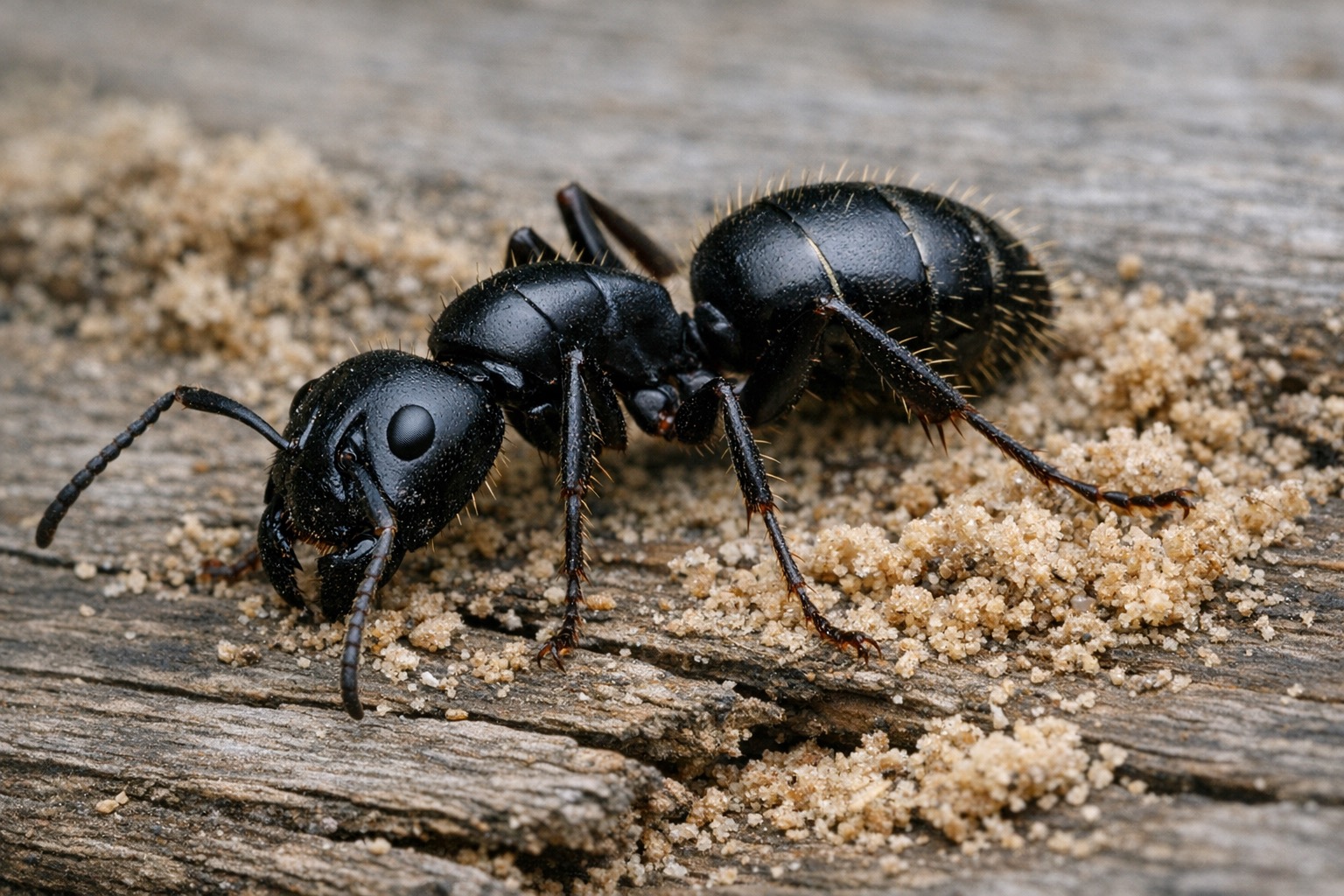
The six signs of carpenter ants: large black ants up to half an inch foraging indoors, small piles of coarse sawdust-like frass below baseboards and window frames, faint rustling inside walls at night, winged swarmers indoors in spring, and ant trails along fences and utility lines toward the house. Their presence almost always signals damp or decaying wood — a moisture problem worth fixing regardless.
Updated October 25, 2026 · Written for Northeastern PA homeowners
The 6 Signs of Carpenter Ants
Carpenter ants announce themselves through big black ants foraging after dusk, piles of sawdust-like frass kicked out of their galleries, faint rustling in walls at night, and winged swarmers indoors in spring. Unlike termites they don't eat wood — they excavate it — so the debris they leave behind is the classic diagnostic sign.
1. Large black ants, up to half an inch. The biggest ants you'll see in a PA home, typically black or red-and-black, foraging in kitchens and along foundations — mostly after dark. A few scouts in spring are common; daily sightings mean a nest in or near the structure.
2. Frass piles. Carpenter ants excavate smooth galleries and push the debris out through small openings: coarse sawdust mixed with insect parts and insulation fragments. Look below baseboards, window frames, basement sills, and door casings — fresh frass is the sign that separates carpenter ants from every other ant.
3. Rustling sounds in walls. An established nest produces a faint crinkling or rustling, audible at night when the house is quiet — often compared to cellophane being crumpled.
4. Winged swarmers indoors in spring. A mature colony (three-plus years old) produces winged reproductives in April and May. Swarmers emerging inside the house mean a nest already established within the structure — not a scout problem.
5. Outdoor trails aimed at your house. Carpenter ants commute between the parent nest and the structure along tree branches, fences, and utility lines. Following a dusk trail often leads straight to the entry point.
6. Smooth, clean galleries in damp wood. Exposed during repairs: tunnels that look sanded, running with the grain — distinct from the mud-packed, ragged galleries termites leave.
Why Carpenter Ants Are a Moisture Warning
Carpenter ants strongly prefer damp, decaying wood, so an indoor nest almost always marks a moisture problem: a leaking sill, clogged gutters, a sweating pipe, or wood-to-soil contact at a porch. Eliminating the ants without fixing the moisture invites the next colony — treat the ants, then repair what attracted them.
Penn State Extension's carpenter ant field guide lists them among Pennsylvania's top structural pests, and NEPA's combination of wooded lots and older housing keeps them busy. The typical story: a parent colony in a stump or landscape timber sends satellite nests into the structure wherever wood stays damp — porch posts, window framing, rim joists, bathroom walls.
That's the double warning. The ants weaken decks, porches, and framing over seasons — slower than termites, but real — and their nest location hands you a map of where your house is wet. Frass below a window frame usually means the sill behind it needs attention, ants or no ants.
Carpenter Ants or Termites?
Carpenter ants have elbowed antennae, a pinched waist, and leave coarse frass outside ragged-looking entry holes; termites have straight antennae, a thick waist, and pack their galleries with mud. Termite damage is faster and costlier, but both deserve prompt professional identification — the treatments are completely different.
The full side-by-side — body shape, wings, debris, and damage patterns — is in our carpenter ants vs. termites comparison guide. If you find swarmers indoors this spring and can't tell which insect you're holding, save a few in a bag or take a close photo; identification takes a technician seconds.
What To Do If You Spot the Signs
Don't spray the ants you see — contact sprays kill a few foragers and can cause the colony to split into multiple satellite nests. Instead, note where trails run at dusk, photograph frass locations, and reduce moisture where you can. Effective control targets the parent colony with baits and non-repellents, not the ants on your counter.
A few productive DIY moves while you decide on treatment: vacuum up visible foragers, trim tree branches and shrubs off the siding, move firewood away from the house, and fix the obvious moisture source. These steps shrink the colony's welcome mat without triggering the budding response that sprays cause.
If swarmers appeared indoors, or frass keeps reappearing after you clean it, the nest is inside the structure and the colony is mature — that's the point where getting rid of carpenter ants stops being a hardware-store project.
When to Call a Pro for Carpenter Ants
Call when frass reappears after cleaning, when swarmers emerge indoors, when you hear rustling in walls, or when daily ant sightings continue past early spring. Lasting control means finding the parent nest — often outdoors in a stump or landscape timber — and eliminating the colony with non-repellent products that spread by contact. We also map the moisture conditions that invited them, so the fix holds.
Free inspection, firm written quote, no pressure. Same-day service available across Scranton, Wilkes-Barre, and the surrounding counties.
Get a Free Quote