TL;DR — the short answer
The six signs of termites in Pennsylvania: mud tubes on foundation walls, discarded wings on windowsills after a spring swarm, hollow-sounding or blistered wood, bubbling paint over damaged framing, tight-fitting doors and windows, and sagging floors in advanced cases. Finding any one of them warrants a professional inspection within days — termites feed year-round and damage is almost never covered by insurance.
Updated October 25, 2026 · Written for Northeastern PA homeowners
The 6 Signs of Termites
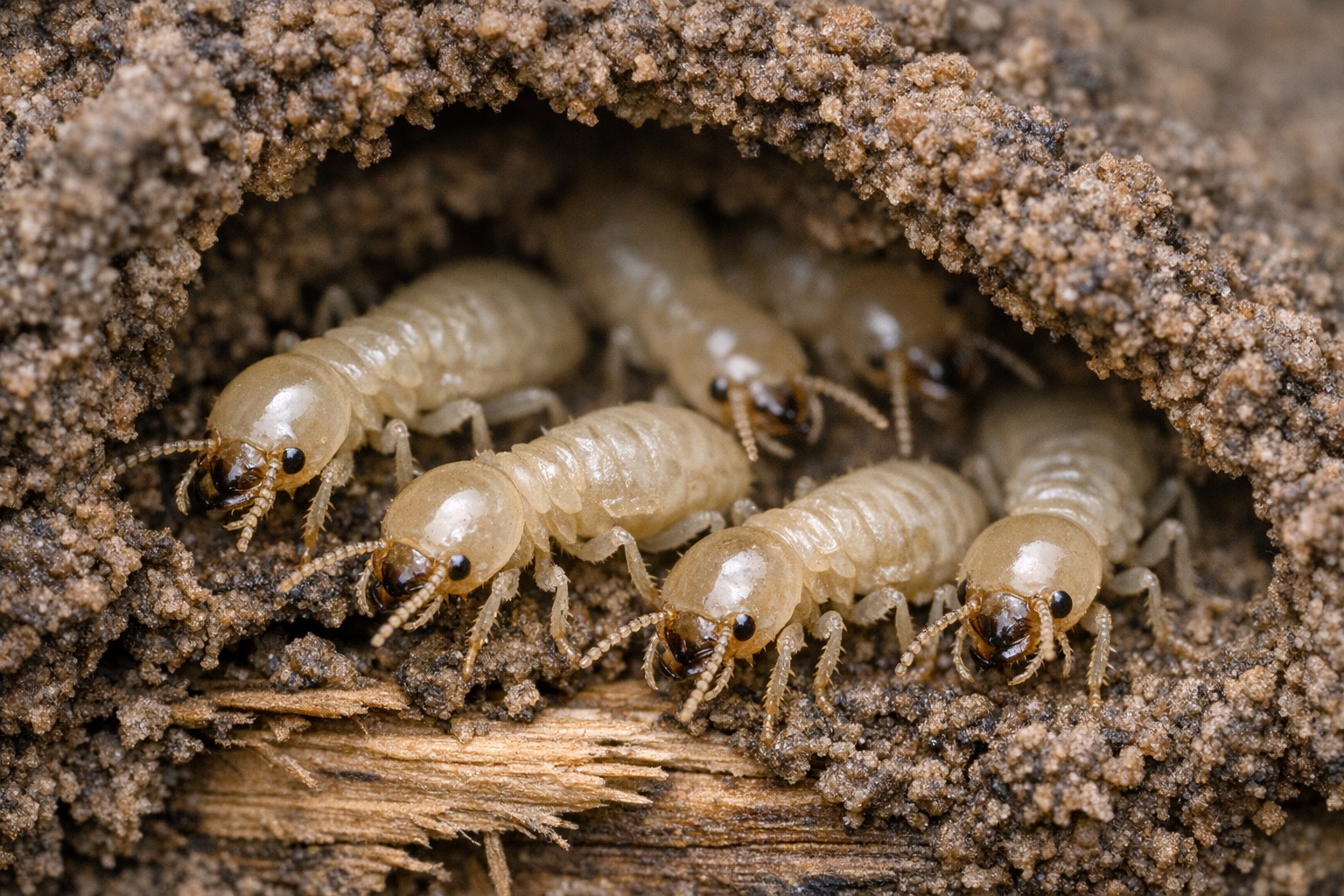
Pennsylvania homes face eastern subterranean termites, which attack from the soil. Their calling cards: pencil-wide mud tubes on foundation walls, spring swarms and piles of discarded wings, wood that sounds hollow when tapped, blistered or bubbling paint, and floors or door frames that warp as feeding weakens the structure beneath them.
1. Mud tubes. The most reliable sign. Termites build pencil-width earthen tubes up foundation walls, piers, and joists to travel between soil and wood without exposure to air. Check the basement or crawl space perimeter, especially behind stored items and in corners.
2. Swarmers and discarded wings. On warm days after spring rain, reproductive termites emerge in clouds. A swarm indoors — or piles of identical, equal-length wings on windowsills — means an established colony in or under the structure.
3. Hollow-sounding wood. Termites eat wood from the inside out, leaving a thin skin of surface wood or paint. Tap baseboards, sill plates, and floor joists with a screwdriver handle; a papery, hollow sound is a red flag.
4. Bubbling or blistered paint. Feeding just beneath the surface, plus the moisture termites bring with them, makes paint bubble in patterns homeowners often misread as water damage.
5. Tight doors and windows. Warped frames from internal feeding make doors and windows suddenly stick — a subtle sign that usually means established damage.
6. Sagging floors or ceilings. A late-stage sign. If floors feel spongy or slopes have appeared, the colony has been feeding for years and the inspection is urgent.
Termite Swarmers vs. Flying Ants
Termite swarmers have straight antennae, a thick waist, and four equal-length wings; flying ants have elbowed antennae, a pinched waist, and front wings longer than the back pair. Both swarm on warm spring days in NEPA — save a sample or a clear photo and get it identified before assuming the cheaper problem.
The mix-up is common and expensive: homeowners see a spring swarm, decide it's ants, and lose a full season while the colony keeps feeding. Our carpenter ants vs. termites comparison walks through identification in detail, including the differences in the damage each leaves behind.
Where to Look in a NEPA Home
Inspect the basement or crawl space perimeter first: foundation walls, sill plates, floor joists, and anywhere wood approaches soil or moisture. In NEPA's older homes, pay special attention to stone and block foundations, porch posts with soil contact, cellar windows, and the damp corners behind furnaces and water heaters.
Do the walk with a flashlight and a screwdriver twice a year — spring and fall. Scranton and Wilkes-Barre's century-old housing stock is prime termite habitat: fieldstone foundations with mortar gaps, settled porches with wood-to-soil contact, and chronically damp basements. Penn State Extension's guide to eastern subterranean termites details the species' biology and the conditions that invite it.
Outside, check firewood stacked near the house, landscape timbers, mulch beds against the foundation, and dead stumps — all are foraging territory that bridges to the structure.
What To Do the Day You Find Them
Don't break open mud tubes or spray the area — disturbed termites simply reroute and become harder to treat. Photograph what you found, note the locations, and schedule a licensed inspection promptly. Termites work slowly; you have days to choose the right treatment, but not months.
The instinct to grab a can of spray is understandable and counterproductive — surface spraying kills a few workers and convinces the colony to feed somewhere you can't see. Leave the evidence intact so the inspector can trace the full extent of activity.
If you're buying or selling a home in Pennsylvania, expect the formal NPMA-33 wood-destroying insect report at closing; most lenders require it. Our termite inspection cost guide explains what's included and when inspections are free.
When to Call a Pro for Termites
Immediately — termites are never a DIY pest. The treatments that work (soil-applied barriers, in-ground bait systems) require licensed products, specialized equipment, and knowledge of how PA construction fails. If you've found mud tubes, swarmers, or suspect wood, an inspection maps the activity and a written quote prices the fix. Annual inspections after that are the cheapest insurance in Pennsylvania homeownership.
Free inspection, firm written quote, no pressure. Same-day service available across Scranton, Wilkes-Barre, and the surrounding counties.
Get a Free Quote