TL;DR — the short answer
Getting rid of termites in Pennsylvania means eliminating a soil-dwelling colony, and only two professional strategies reliably do it: liquid soil treatments that create a continuous treated zone around the foundation, and in-ground bait systems that foraging workers carry back to kill the colony. DIY products can't replicate either. The right choice depends on construction, lot conditions, and budget — which is why treatment always starts with a licensed inspection.
Updated October 25, 2026 · Written for Northeastern PA homeowners
Why DIY Termite Control Fails
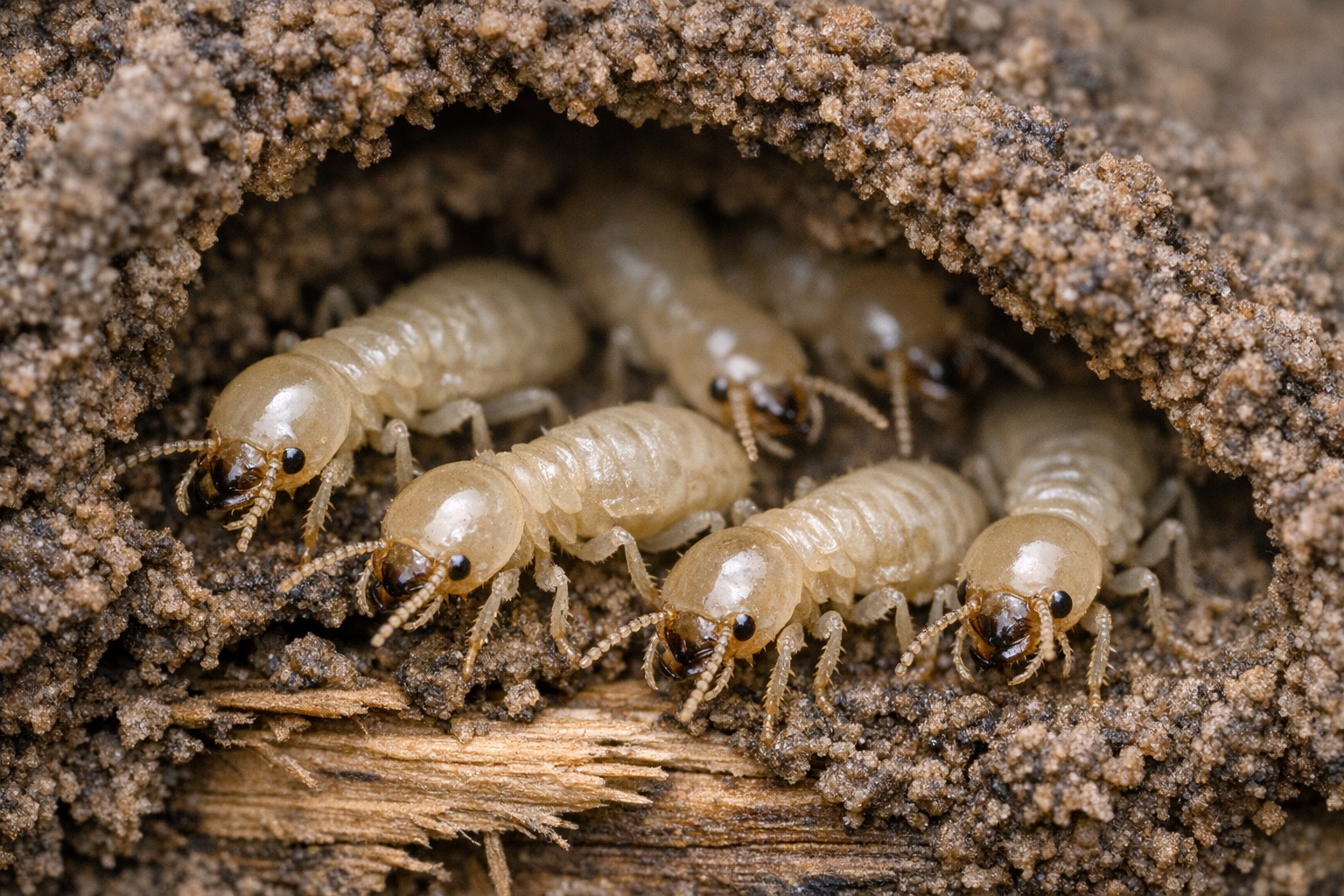
Termite colonies live in the soil and number in the hundreds of thousands — killing the workers you see does nothing to the colony producing replacements. Effective treatment requires creating a continuous treated zone in the soil around the foundation, which takes licensed products, soil-injection equipment, and knowledge of construction. Hardware-store sprays and stakes treat symptoms, not colonies.
The biology is the problem: the termites in your walls are a foraging party from a colony that may extend well beyond your foundation. Penn State Extension's overview of eastern subterranean termites explains the colony structure — and why surface treatments simply redirect foraging to untreated sections of your home.
Missed sections are the silent failure mode. A DIY gap in the treated zone — under a porch slab, behind a chimney, along a stone foundation wall — is an open door the colony finds within weeks. This is also where bargain professional quotes cut corners, so compare scope, not just price.
Option 1: Liquid Soil Treatments
A liquid termite treatment trenches, drills, and treats the soil around the entire foundation with a non-repellent termiticide. Foraging workers pass through the treated zone, carry the active ingredient back on their bodies, and spread it through the colony by contact. Applied correctly, modern products protect a home for five years or more.
The key word is non-repellent: older repellent products just deflected termites to untreated gaps. Modern non-repellents are undetectable to the workers, who become unwitting carriers — the same transfer principle that makes professional ant and roach baits work.
In NEPA's older homes, application quality matters as much as chemistry. Stone foundations, crawl spaces, attached porches, and additions each change how the zone must be drilled and treated. A quote that doesn't walk the full perimeter and discuss construction specifics isn't a real quote.
Option 2: Bait Station Systems
In-ground bait stations ring the structure every ten to twenty feet and are checked on a schedule. When foraging termites find a station, the wood cartridge is replaced with a slow-acting bait that workers carry back and share, eliminating the colony — including the queen — over the following weeks to months.
Baiting is lower-disruption: no trenching, no drilling, no large product volumes in the soil — which suits wells, drainage-sensitive lots, and finished landscaping. The trade-off is time (colony elimination takes weeks, not days) and the ongoing monitoring relationship: stations only protect while they're inspected and maintained, so bait systems typically carry an annual service agreement.
For a typical NEPA home, both approaches land in a similar first-year price range — our termite treatment cost guide breaks down the numbers and what drives them.
Treatment Methods Compared
Liquid barriers work faster and protect longer per application; bait systems eliminate colonies with minimal disruption but require annual monitoring; spot treatments only fit a single confirmed area caught early. Most NEPA homes choose between the first two — and the decision follows construction and lot conditions, not preference.
Many NEPA jobs end up combining methods — a liquid barrier on the active elevations plus bait stations covering the rest, for example. A licensed inspector maps activity and conducive conditions first, then prices the options in writing.
| Method | How it works | Best for |
|---|---|---|
| Liquid soil barrier | Continuous treated zone around the foundation; non-repellent product spreads through the colony by contact | Most homes; fast protection; 5+ year residual |
| Bait station system | In-ground stations; foragers carry slow-acting bait back to eliminate the colony | Sensitive lots, wells, finished landscaping; no drilling |
| Spot treatment | Localized treatment of one confirmed activity area | A single mud tube caught early — not widespread activity |
| Borate wood treatment | Wood-applied preservative during construction or renovation | New builds and exposed framing during remodels |
Reducing Termite Risk Around Your Home
The conditions that invite termites are fixable: keep mulch and soil below siding, maintain six inches of clearance between soil and wood, fix gutters and grading so water leaves the foundation, remove stumps and buried wood debris, store firewood away from the house, and schedule an annual inspection — the cheapest line item in PA homeownership.
Moisture is the multiplier. Termites need it, and NEPA's wet springs deliver it — clogged gutters, short downspouts, and negative grading keep foundation soil damp and inviting. Correcting drainage is termite prevention as much as it is basement maintenance.
Wood-to-soil contact is the other big one: porch posts, deck supports, lattice, and landscape timbers touching the ground are bridges into the structure. Break the contact or treat the wood, and you've removed the colony's easiest route.
When to Call a Pro for Termites
Always — there is no DIY tier for termites. If you've found mud tubes, swarmers, or damaged wood, the next step is a licensed inspection that maps activity and prices liquid vs. bait options for your specific construction. Treatment should come with a written warranty and an annual inspection plan; that's what keeps the most expensive pest in Pennsylvania from becoming the most expensive repair.
Free inspection, firm written quote, no pressure. Same-day service available across Scranton, Wilkes-Barre, and the surrounding counties.
Get a Free Quote