TL;DR — the short answer
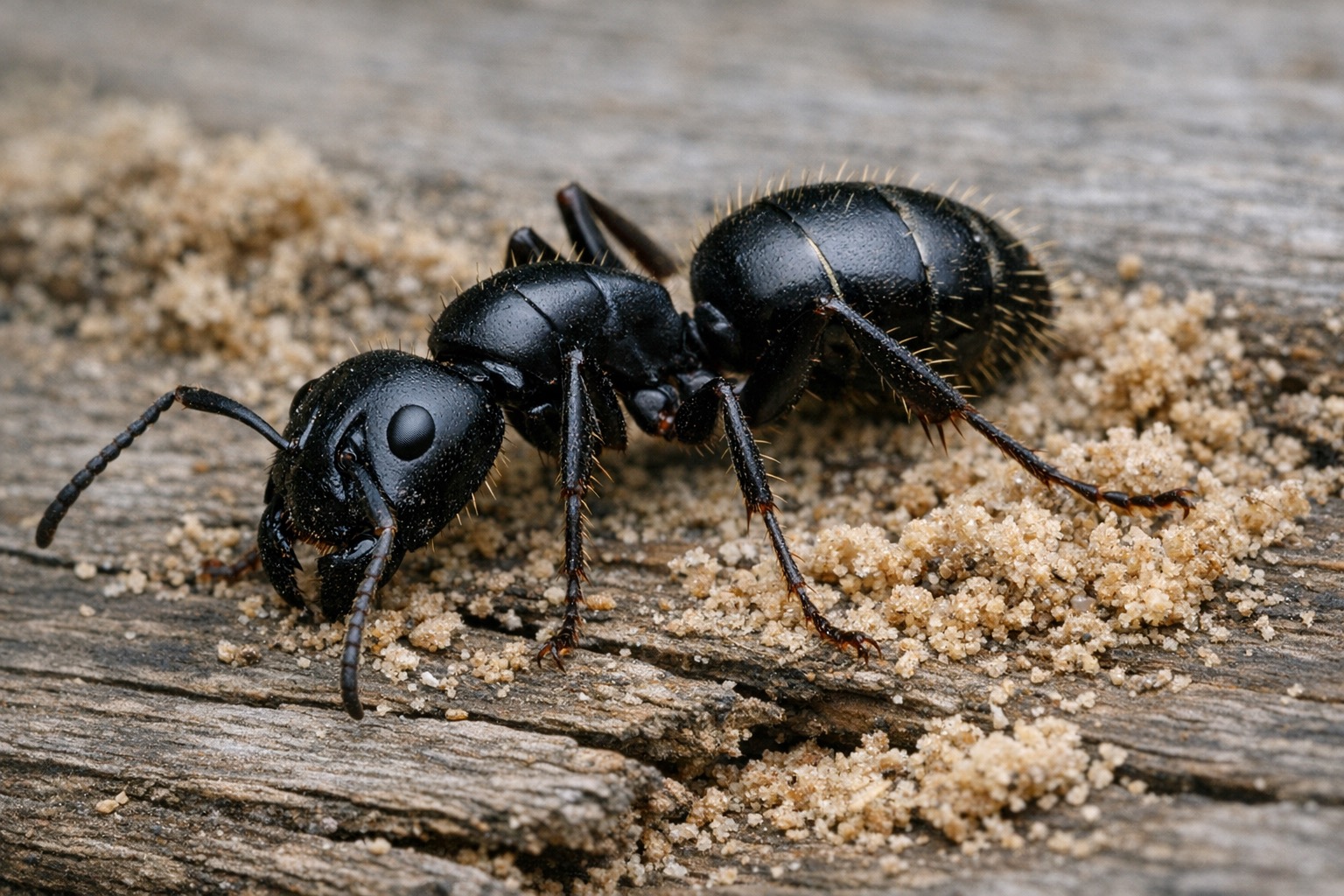
Getting rid of carpenter ants means eliminating the colony, not the foragers: trace the dusk trails to find the nest, use slow-acting baits workers carry back to the queen, and avoid repellent sprays that split the colony into satellite nests. Then fix the moisture problem — carpenter ants nest in damp wood, so the leak or soil contact that invited them has to go too.
Updated October 25, 2026 · Written for Northeastern PA homeowners
Step 1: Find the Nest Before You Treat Anything
The ants in your kitchen are foragers from a colony that lives somewhere else — often a parent nest in a stump, woodpile, or landscape timber outside, plus satellite nests in damp structural wood indoors. Go out at dusk with a flashlight and follow the trails along fences, utility lines, and tree branches toward the house.
Carpenter ants commute on established trails, and foraging peaks after dark — which is why the ants seem to appear from nowhere each evening. Ten minutes of patient trail-following usually reveals the entry point: a gap at a pipe penetration, a porch post with soil contact, a branch touching the roofline.
Frass piles mark indoor satellite nests: coarse sawdust below baseboards, window frames, and basement sills means a nest void directly above. Penn State Extension's carpenter ant guide details the colony structure that makes nest location the whole game — kill the queen's network and the problem ends; kill foragers and you've removed a few percent.
Step 2: Use Slow-Acting Baits
Carpenter ant baits work because workers share food with the colony, including the queen. Place sugar- or protein-based baits directly on active trails and near entry points, and expect the colony to collapse over one to two weeks. Don't kill the ants visiting the bait — they're the delivery mechanism.
Bait acceptance shifts through the season: spring colonies chasing protein may ignore sugar gels that worked in July, so be ready to offer both types and let the ants vote. Place baits out of reach of kids and pets, along the trails you mapped in step one — not randomly around the kitchen.
Keep other food unavailable while baiting: a colony with easy crumbs in the pantry has no reason to take your bait home. Wipe counters, seal food, and let the bait be the most attractive option in the house.
Step 3: Why Spraying Foragers Backfires
Contact sprays kill only the foragers you see — a small fraction of the colony — and repellent sprays stress the nest into budding: one colony splits into several satellite nests, each harder to find. Every spray application typically converts one treatable problem into a multi-nest one.
The budding response is well documented in pest-management literature and is the reason carpenter ant problems so often seem to 'spread' after DIY treatment. The EPA's safe pest control principles — identify first, use least-toxic targeted methods, avoid broadcast spraying — apply here exactly.
The professional alternative is non-repellent transfer products: undetectable treatments applied to trails and voids that workers walk through and carry back, spreading through the colony by contact. These are the licensed-products tier of ant control, and they're why professional treatments succeed where perimeter sprays fail.
Step 4: Fix the Moisture Problem
Carpenter ants nest in damp or decaying wood, so the colony's location marks a moisture problem: leaking sills, clogged gutters, wood-to-soil contact, or condensation in wall voids. Treat the ants without fixing the moisture and the next colony moves into the same softened wood — often within a season.
Walk the nest locations with a repair mindset: extend downspouts, regrade soil away from the foundation, replace softened porch posts and window sills, and pull mulch and landscape timbers back from wood contact. In NEPA's wet springs, gutters and grading are the most common culprits behind recurring carpenter ant pressure.
Outdoors, remove the habitat: dead stumps, rotting landscape ties, and firewood stacked against the house are parent-colony real estate. Firewood belongs twenty-plus feet from the structure and off the ground.
Step 5: Keep Them From Coming Back
Long-term prevention is habitat and access: trim branches and shrubs off the siding, seal utility penetrations, maintain the six-inch soil-to-wood clearance, and fix moisture as it appears. Wooded NEPA lots with annual pressure often justify a quarterly perimeter plan after the initial colony elimination.
Spring swarmers indoors are the annual alarm bell — they mean a nest established in the structure. Seeing big ants indoors in April is the cheap moment to act; by August the colony has had a full season to expand its gallery network.
If the same areas keep producing trails each spring despite good sanitation and exclusion, that's the profile of a wooded-lot property that benefits from scheduled perimeter service rather than annual crisis response.
When to Call a Pro for Carpenter Ants
Call when frass keeps reappearing, when swarmers emerge indoors, when trails persist after two weeks of baiting, or when the nest is inside a wall void you can't reach. Professional treatment traces the parent colony and eliminates the network with non-repellent transfer products — and includes a moisture map of the conditions that invited them, so the fix holds past one season.
Free inspection, firm written quote, no pressure. Same-day service available across Scranton, Wilkes-Barre, and the surrounding counties.
Get a Free Quote