TL;DR — the short answer
A small, visible paper wasp starter nest in spring — golf-ball sized, reachable from the ground, away from doors and play areas — is a legitimate DIY job with an evening treatment. Everything else is not: mature nests, underground yellow jacket colonies, and nests inside walls can put hundreds of defending wasps on you in seconds. Never seal the entrance of an active void nest.
Updated October 25, 2026 · Written for Northeastern PA homeowners
First: Know What You're Dealing With
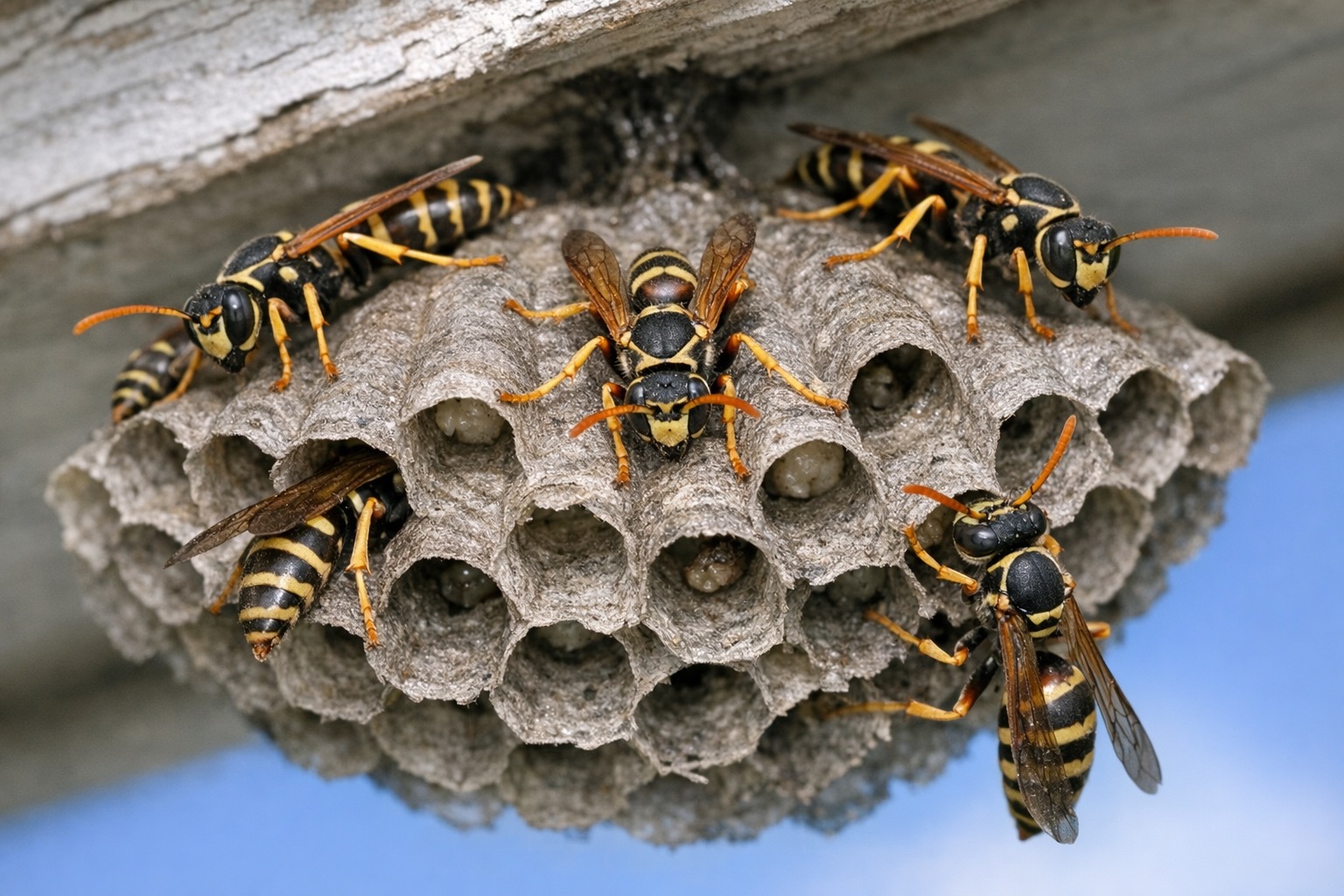
Paper wasps build small open combs under eaves and are moderately defensive. Bald-faced hornets hang large gray paper footballs in trees and defend aggressively. Eastern yellow jackets — NEPA's most dangerous stinging insect — nest underground and in wall voids, attacking in numbers when disturbed. Honey bees are beneficial and get relocated, not exterminated.
Identification determines risk. The open umbrella-shaped comb under your deck railing with a dozen visible wasps is a paper wasp nest — a spring DIY candidate. The steady stream of yellow-and-black insects disappearing into a hole in the lawn is a yellow jacket colony that by August holds thousands of workers and will defend itself as a unit. Penn State Extension's stinging insect overview covers the species common across Pennsylvania.
Bald-faced hornets (actually a yellow jacket relative) build the big gray aerial nests in trees and on structures. Their sting is painful, their defense zone is wide, and their nests at height add ladder risk — treat them as professional work once larger than a fist.
DIY Safety Rules for Small Nests
If the nest is small, visible, and reachable from the ground: treat at dusk or dawn when the colony is home and sluggish, wear long sleeves and eye protection, have your escape route planned before you spray, and use a wasp spray with a long jet stream. One treatment, then leave — check for activity the next day before approaching again.
The timing rule is non-negotiable: treat in the evening, when foragers have returned to the nest and cool temperatures slow their flight. A midday spray hits a mostly-empty nest and leaves hundreds of returning wasps angry in your yard.
Position yourself with the wind at your back and a clear, practiced exit path — this is not the moment to discover the garden hose is tangled. Wait 24 hours after treatment before approaching, knock down the inert nest only after no activity is visible, and never stand on a ladder to treat a nest: a few stings at height become a fall.
Nests You Should Never DIY
Three nest types are professional-only: yellow jacket colonies in the ground or in wall voids (mowing over one is a classic NEPA ER visit), any nest inside a structural void, and any nest requiring a ladder. Also never seal the entrance of an active void nest — trapped wasps chew through drywall into living spaces looking for an exit.
Void nests defeat consumer products on physics alone: a spray jet at the entrance can't reach a colony deep in the wall, it only provokes it. Professionals use injection equipment and insecticidal dusts that the colony's own traffic carries inward — the difference between treating a doorway and treating a nest.
Ground nests carry their own trap: they look like a hole with traffic, and the first hint many homeowners get is the mower going over it. If you find steady yellow jacket traffic to a ground hole, keep kids and pets away and call — evening treatment with protective gear resolves it in one visit. Anyone with a known sting allergy should treat every nest as professional work: roughly one in thirteen Americans is allergic, and a swarm defense is the worst possible first exposure.
Honey Bees Are a Different Call
Honey bees are valuable, often-protected pollinators: a swarm clustered on a branch or a colony in a wall should be relocated alive, not exterminated. Local beekeepers remove swarms — frequently at low or no cost — and established colonies get referred to keepers with cut-out experience.
A spring swarm — a basketball-sized cluster of bees hanging quietly from a branch — looks alarming and is actually honey bees at their most docile: they have no nest to defend and are resting while scouts find a new home. Leave it alone and call a beekeeper; most swarms move on or get collected within a day.
How to tell bees from wasps at a glance: honey bees are fuzzy and golden-brown with muted striping, while wasps and yellow jackets are smooth-bodied and brightly patterned. Fuzz means flowers and relocation; smooth and shiny at your picnic means wasp.
Keeping Next Year's Queens Out
Old nests are never reused, but attractive sites are — new queens pick the same eaves and soffits each spring. Prevention is a spring game: treat eaves and overhangs before nests establish, seal soffit gaps and screen vents, and remove last year's nests once confirmed inactive so you can spot new construction early.
In NEPA, that means an April–May walk-around: check eaves, porch ceilings, play equipment, and shed overhangs weekly while nests are golf-ball sized and removable in one evening. A nest found in May is a five-minute problem; the same site in September is a professional call.
For properties with recurring pressure — eaves that host nests every year, or yards with annual yellow jacket activity — a preventive spring treatment of the structure's overhangs is among the cheapest pest services there is. Our wasp nest removal cost guide covers both removal and prevention pricing.
When to Call a Pro for Wasps
Call for any nest larger than a fist, any nest after mid-summer, any nest in the ground or in a wall, anything requiring a ladder, and any property with a sting-allergic family member. We treat in the evening when the colony is home, handle void and underground nests with injection equipment, remove accessible nests once activity stops, and refer honey bees to local beekeepers for live relocation. Same-day service is available across the Scranton–Wilkes-Barre metro.
Free inspection, firm written quote, no pressure. Same-day service available across Scranton, Wilkes-Barre, and the surrounding counties.
Get a Free Quote